Ever wondered about the ultimate summer refresher – G&T (Gin & Tonic) and where it’s origins lie? It’s classy yet understated and as a friend once put it, “I drink it if I need to socialize” – a gentle nod to the social status held by G&T.
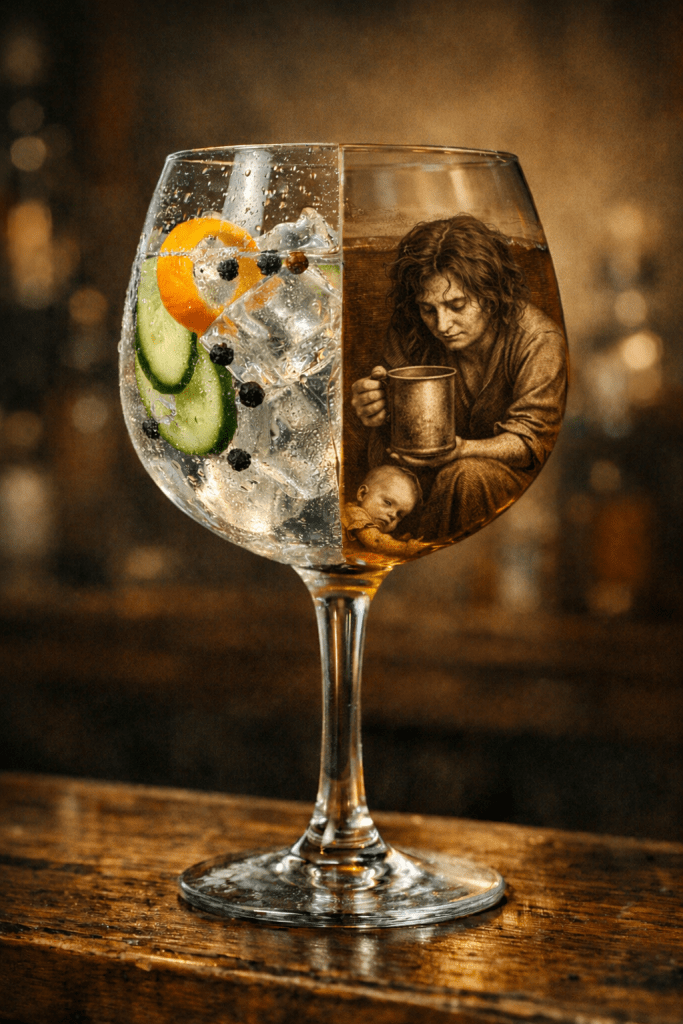
Can you imagine a Posh whisky sour ? Rather hard isn’t it. Yet when you think of Posh G&T one could clearly picture a long-stemmed copa de balón glass, droplets of condensation trickling down its rounded curves, the crisp whiff of juniper berries, lifted by a refreshing cucumber or a fragrant orange peel and peppercorns. That is class alright!
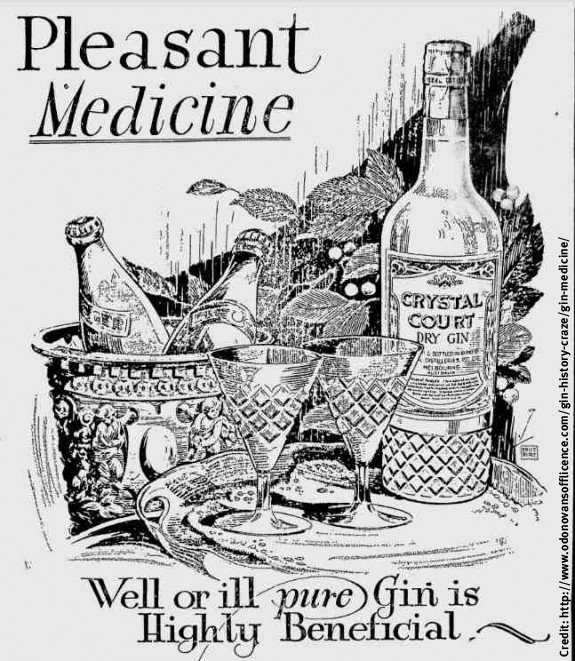
Gin has a colourful history, evolving from a medicinal drink to an affordable tipple for the commoners, and now to a beverage that paints a picture of a classy social gathering – flowy skirts, bright sunshine and the women throwing their heads back in laughter. The latter influenced by my first introduction to gin which colored my view of it as an affable drink. It is a little hard to imagine, but the ‘light and refreshing’ gin was we know it to be today, once had a dark past. That said, gin makers seem to have worked tirelessly to rewrite its history and succeeded at it.
As far as the written records go, gin started as a medicinal liquor in the Netherlands. Infused with juniper berries – did you know that juniper berries are not actually berries but female seed cones? The spirit was known for its anti-inflammatory properties and credited for being a digestive aid. If I may, no Digene tablet back then, only Di-GIN-e! What’s a blog without some poor jokes to make my readers smile?!
The spirit’s fame and decline
Jenever, the Dutch ancestor of Gin travelled to London from the Netherlands in the late 1600’s with the Dutch King William III of Orange, who took the throne in England and Ireland and encouraged it’s consumption for his subjects. In the late 17th century the English government de-regulated the gin sector to encourage domestic production of gin as an alternative to the French brandy as a repercussion of a war with France. With no need for a distiller’s license to produce gin, every second person started to produce gin with questionable and degrading means of production. Cheap prices for gin and low taxes soon led London to a “Gin Craze”. Alcohol and cheap – Yes! said the poor. Cheap alcohol was not just “alcohol” for the lower class, it was an escape from their daily struggles with poverty, hunger and everything else that arose with it. Alcohol was a ‘support system’ that rendered them supportless.
Innumerable demand and lower taxes led to extremely low prices for gin, even cheaper than beer, tea, or clean water! The dark alias of the gin, “Mother’s Ruin”, pays homage to the disastrous era of the gin. Mothers traded their little babes for a pint of gin, wet nurses gave gin to quieten babies, men bartered their daughters’ and wives’ for gin. This was not a period of solely personal ruin but of poverty, policy and power. In early 1700’s the government introduced the Gin Act to ban the consumption which eventually led to a restriction on the consumers but more importantly the distillers. Leading to reduced production of low quality gin and the subsequent upliftment of the society.
While gin was wearing different personalities in London, it reverted to its old ‘medicinal’ personality in the 19th century British ruled India. Gin is now synonymous with Gin and Tonic, and I can with surety say that tonic is the letter on which gin expresses it’s story.
Tonic water was a fizzy concoction containing quinine, a compound extracted from the cinchona tree, that is native to South America and was later cultivated in colonial India, to combat malaria, and which lends tonic water its characteristic bitter yet inviting taste. Quinine was consumed by the British Army officers in India to prevent malaria. However, to mask its bitter taste, they often mixed it with gin, sugar, lime and soda. Tonic water said to have been originated in mid 1800 by mixing quinine in small quantities with aerated water and sugar. Thus creating a crisp, bitter yet addictive standalone drink, often yielding best results with gin and a lime. In the British colonies by 1863, while it is not entirely sure whether tonic water does prevent malaria, it was advertised as a drink that acts as an antacid and prevent fevers.
A shifted perspective that stuck
The first mention of Gin and Tonic, the beloved affable drink of every socialite, was in 1868 where the attendees called for it at the end of a horse race in Lucknow, British India. Horse race was introduced to India by the British Raj as an aristocratic club culture, serving the purpose of an event where the elite met to socialize. Naturally, the drink came to be linked with the elite society those who attended horse races and ended their afternoons with a gin and tonic to find relief from the Indian heat. Over time, it earned its reputation as a refreshing summer drink for the refined, and rightly so. Next time you pick up a bottle of tonic water, take a closer look at the label. Chances are it says “Indian Tonic Water.” Thus paying a tribute to where the tonic water ought to have originated from.
A sharp turn from the pauper’s tipple to the Elite’s indulgence, Gin is rather versatile isn’t it? It fits where it finds itself. I’m eager to see which personality it adopts next ! Perhaps, in the year’s to come, it may even be forgotten?
Comments
This blog is intended to share information, views or facts that seemed interesting to me and the accuracy of the content above has not been independently verified.
This blog is meant to be a light read and is not intended to offend anyone and I would encourage more thoughts or views on it as part of a healthy discussion! It’s a safe space for anyone who loves exploring the little things!

 All Little Things
Leave a comment